Homes Are Taking 48–56 Days to Sell Now — Here's How That Changes Your Sale-and-Purchase Timeline
Homes Are Taking 48–56 Days to Sell Now — Here's How That Changes Your Sale-and-Purchase Timeline
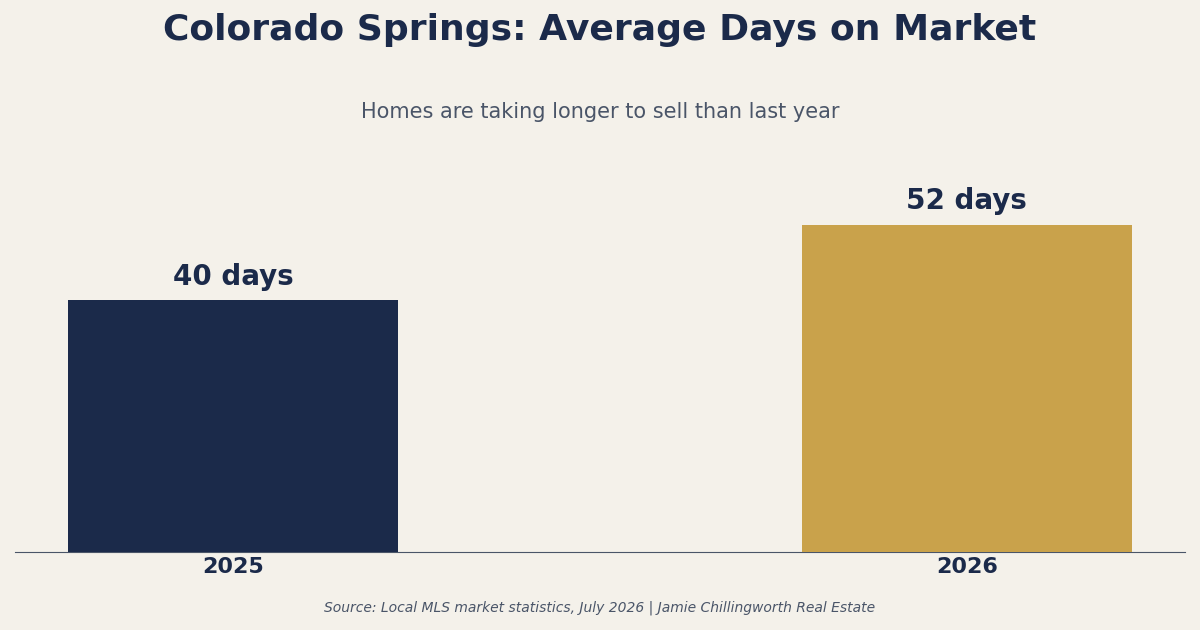
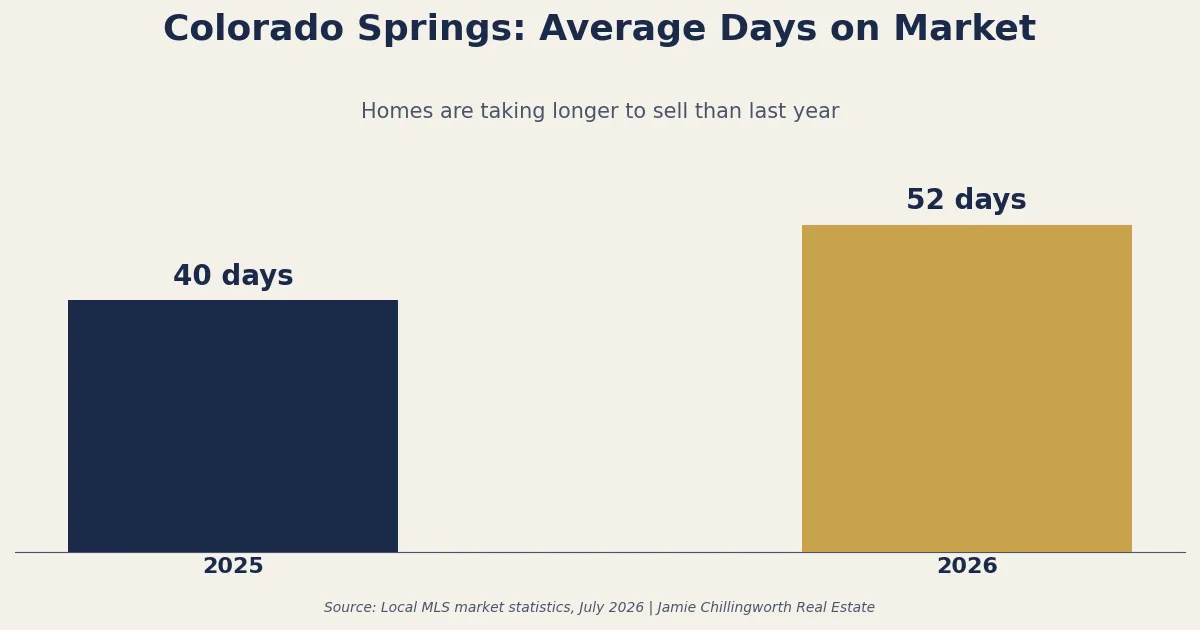
If you bought your current home in the last few years, you probably remember homes going under contract in a matter of days. That's not the market anymore. In Colorado Springs, the average time to sell has stretched to somewhere between 48 and 56 days as of mid-2026 — up meaningfully from the year before. If you're a move-up seller planning to sell your current home and buy your next one, that shift changes the order of operations you should be planning around.
What's Actually Happening
Local market data shows July 2026 sales taking an average of 48 days, roughly 21% longer than the same point last year. Other tracking puts the number closer to 56 days depending on the data window. Either way, the direction is the same: homes are sitting longer than they were, inventory has grown by more than 20% year-over-year, and the market has settled into what's best described as neutral — homes are selling for about 98.8% of asking price, which is healthy, but it's no longer a market where a well-priced home goes under contract in a weekend.
This isn't a warning sign. It's information. And for move-up sellers specifically, it's information that should directly shape how you sequence your sale and your purchase.
Why This Matters More for Move-Up Sellers Than First-Time Buyers
A first-time buyer only has to manage one transaction. A move-up seller is managing two, and they're linked — your ability to buy the next house often depends on the proceeds and timing of selling the current one. When homes were selling in a week or two, that sequencing risk was smaller: list, get an offer fast, negotiate a rent-back or close timeline, move on to the next purchase.
At 48–56 days average, that math changes. If you list your home and it takes seven weeks to get to a signed contract, and then another 30-45 days to close, you're looking at a three-month runway before you have funds in hand — longer if anything about your sale is complicated. If you try to buy first and carry two mortgages while you wait for your current home to sell, that gap is exactly what puts pressure on your finances.
Three Ways to Structure the Timeline
Sell first, with a rent-back or extended closing built in. With more inventory on the market, sellers have less leverage to demand a fast close from buyers, but rent-back agreements (staying in your home for a negotiated period after closing while you shop for your next one) are still very achievable in a neutral market. This lets you convert equity to cash before you're competing to buy.
Get pre-approved and start watching inventory before you list. Since homes aren't moving as fast, you have more breathing room to watch the market for your next home while your current one is still listed, rather than needing to have already found it. Longer days on market cuts both ways — it benefits you as a buyer on the other end of your own transaction.
Price to the current market, not last year's market. The biggest risk in a slower market isn't that your home won't sell — it's pricing it based on what homes were doing a year or two ago and then sitting unsold for months while carrying two sets of housing costs. A home priced accurately for today's 48–56 day environment will still move; an overpriced one will simply add weeks to your timeline.
What This Means for You Right Now
None of this means move-up sellers should wait. If anything, more inventory means more real options on the buy side once your equity is freed up, and pricing correctly still moves homes in a reasonable window. What it does mean is that "list it and figure out the rest later" is a riskier plan than it was two years ago. The sellers doing well right now are the ones who've mapped out the sequence — sale terms, closing flexibility, and purchase search — before they ever put a sign in the yard.
Next Step
If you're thinking about selling this fall to move up, let's build your specific timeline together — how your equity works, what a realistic listing-to-closing window looks like for your home, and how to structure the sale so you're not stuck carrying two mortgages.
Want a free sale-and-purchase timeline worksheet? Reach out and I'll send it over, or we can just get on a call and map yours out directly.


