Inventory Is Loosening — What That Means If You're a Move-Up Seller
Inventory Is Loosening — What That Means If You're a Move-Up Seller
For the last few years, "move up" in the Pikes Peak Region has meant a specific kind of stress: sell fast in a tight market, then scramble to find your next home before somebody else grabs it. That equation is shifting. Inventory is rising, homes are sitting longer, and both sides of a move-up transaction — the sale and the purchase — are playing out differently than they did even eighteen months ago.
The Numbers Behind the Shift
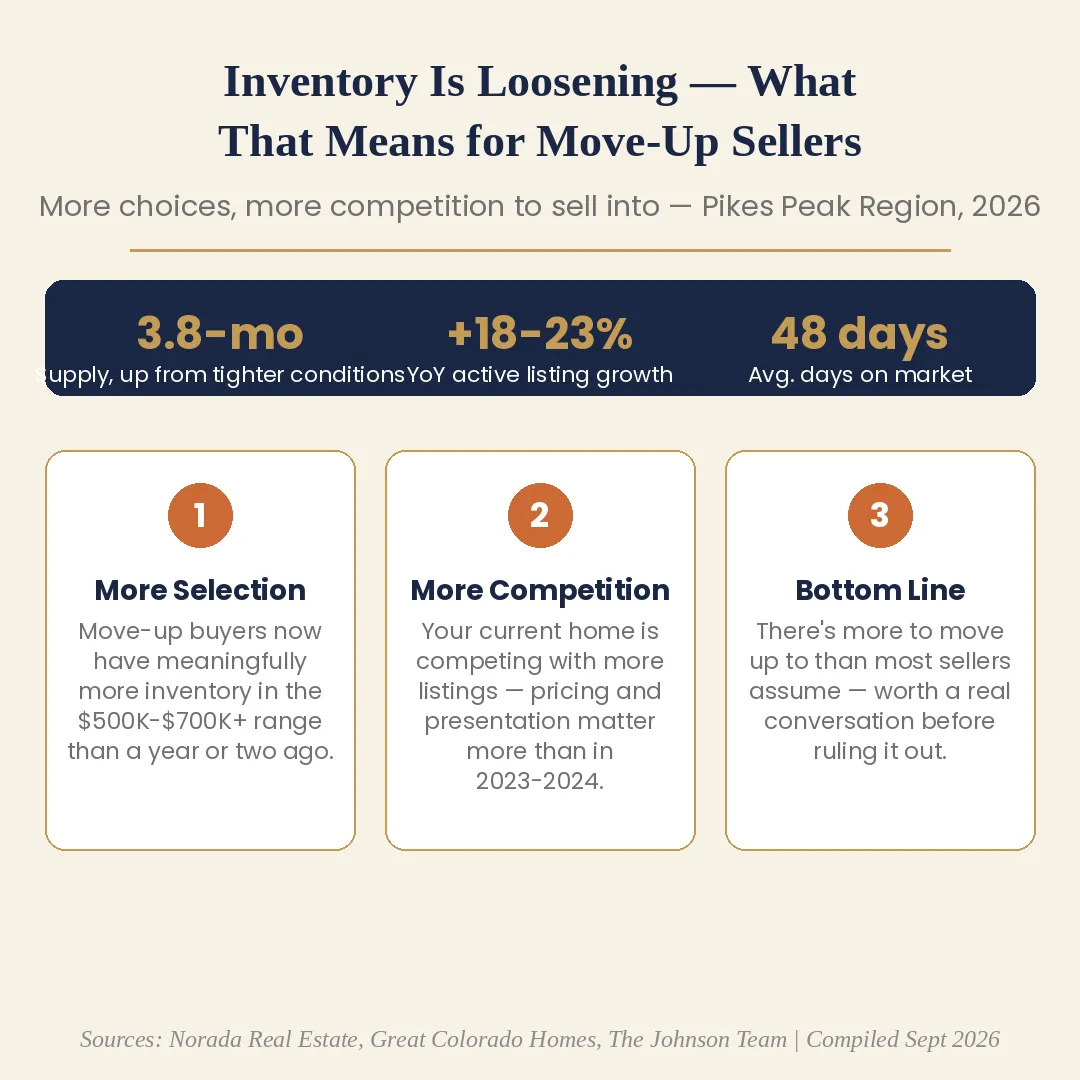
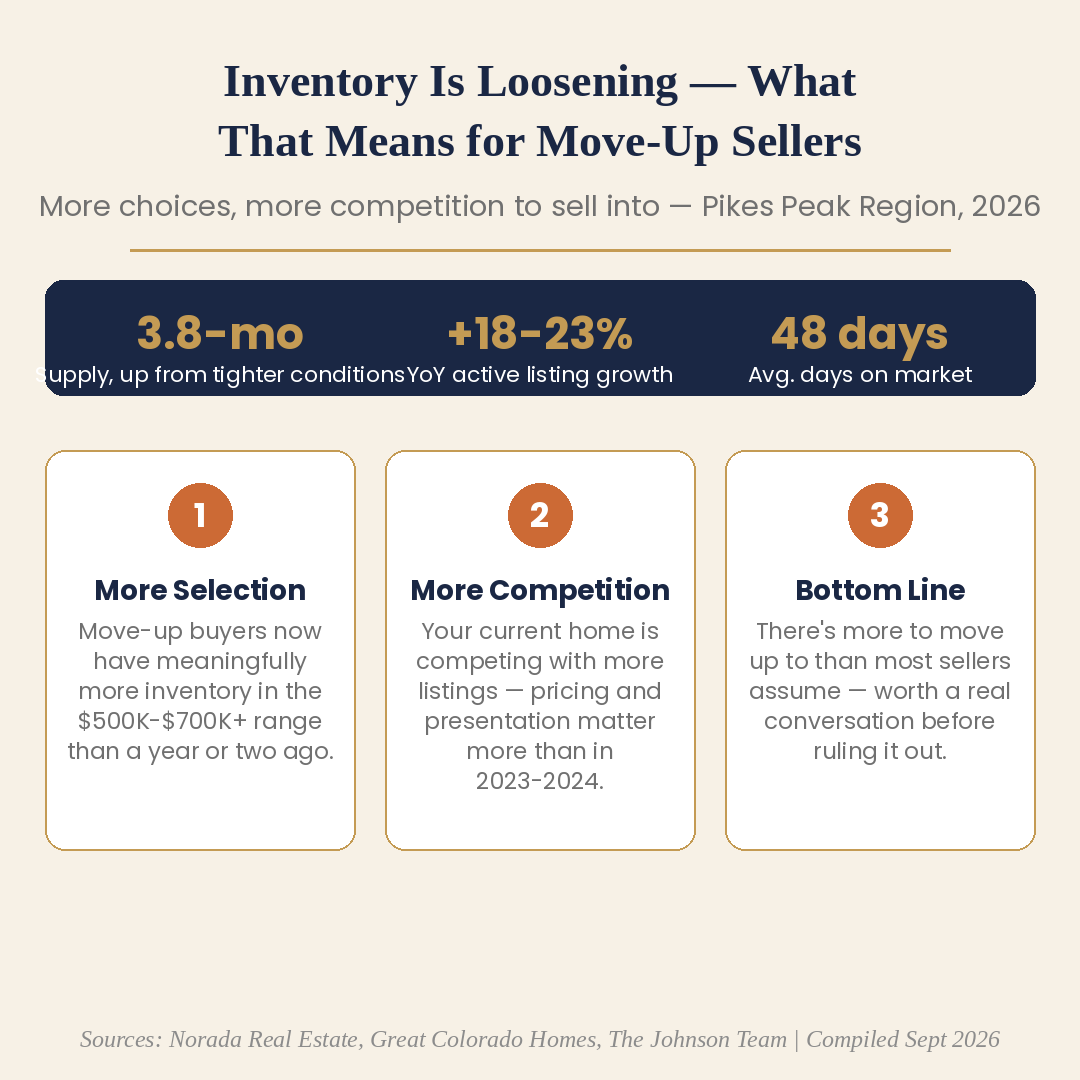
Housing supply in the region currently sits at about 3.8 months — up meaningfully from the tighter conditions of the last few years, though still short of the 6-month mark that typically defines a balanced market. Active listings are up somewhere between 18% and 23% year-over-year, depending on the month. And homes are averaging 48 days on market, roughly a 21% increase from a year ago. None of these numbers scream "buyer's market," but together they describe something real: more choices, less urgency, and more room to negotiate on both ends of a move-up transaction.
More Selection on the Buying Side
This is the part move-up sellers tend to miss. If you assumed a year or two ago that "there's nothing to move up to," that assumption is worth revisiting. More inventory in the $500,000–$700,000-plus range means more realistic options once you're ready to buy — not just more homes listed, but more time to actually compare them instead of racing to write an offer the day a listing hits the market.
More Competition on the Selling Side
The flip side is that your current home isn't selling into the same market it would have two years ago either. With more active listings competing for buyer attention, pricing accurately and presenting well matter more now than they did during the tightest years of the last cycle. Homes that are overpriced or under-prepared sit — and 48 days is already the average, not the ceiling.
What This Means for Your Timeline
Longer days on market cuts both ways, and that's actually good news for move-up sellers specifically. It means more room to negotiate contingencies, more flexibility on closing and possession timing, and — with nearly half of local closings now including seller concessions — more leverage to structure a sale-and-purchase that doesn't require you to be homeless for three weeks in between. The classic move-up fear (sell and have nowhere to go) is less acute in a market with this much breathing room.
The Bottom Line
There's more available to move up to than most sellers currently assume, and the market conditions that used to make timing a sale-and-purchase together feel impossible have eased. That doesn't mean every neighborhood or price point behaves identically — it means the conversation is worth having with real numbers instead of assumptions from two years ago.
Curious what's actually available in your next price range, or what your current home would net you today? Send me your address and your target neighborhood, and I'll run the real numbers — no obligation.
Sources: Colorado Springs Housing Market: Trends and Forecast 2025-2026 (Norada Real Estate), Colorado Springs Housing Market in 2026 | Local Real Estate Statistics (Great Colorado Homes), 2026 Colorado Springs Housing Market Forecast (The Johnson Team), Colorado Springs Summer 2026 Housing Market (The Q Group)


