You Have More Equity Than You Think
You Have More Equity Than You Think: How Move-Up Buyers Are Using It Right Now
If you bought your home in the Pikes Peak Region more than a few years ago, there's a good chance you're sitting on more equity than you realize — even though the market has cooled from the frantic price growth of a couple years back. The catch for move-up buyers is that prices across the whole ladder have leveled off together, which means the dollar "spread" between your current home and your next one hasn't grown the way your equity has. The good news: that equity can still work hard for you, if you know which financing strategy fits your situation.
Why the Math Feels Different Than It Used To
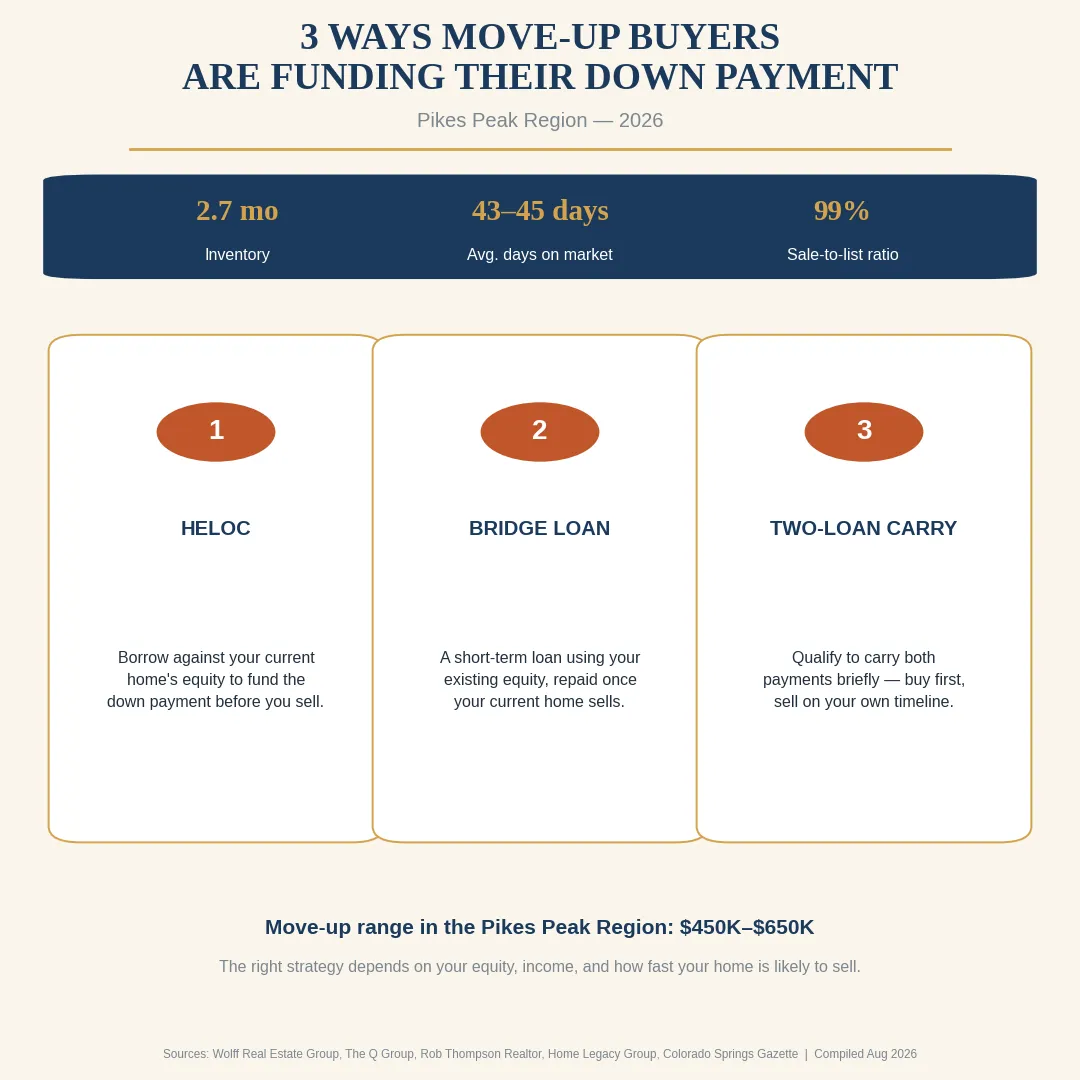
El Paso County's housing market has settled into balanced territory — homes are averaging 43 to 45 days to sell, inventory sits around 2.7 months, and the sale-to-list ratio is running close to 99%. The median single-family price was around $460,000 late last year and has since moved closer to $499,900. For move-up buyers, the typical price range runs roughly $450,000 to $650,000.
Here's the part that trips people up: because prices across every tier have flattened together, the gap between what you'll net selling your current home and what you'll pay for the next one hasn't widened the way it might have a few years ago. That doesn't mean move-up buying is a bad idea right now — it means the financing strategy you choose matters more than it used to.
Three Ways Move-Up Buyers Are Funding Their Down Payment
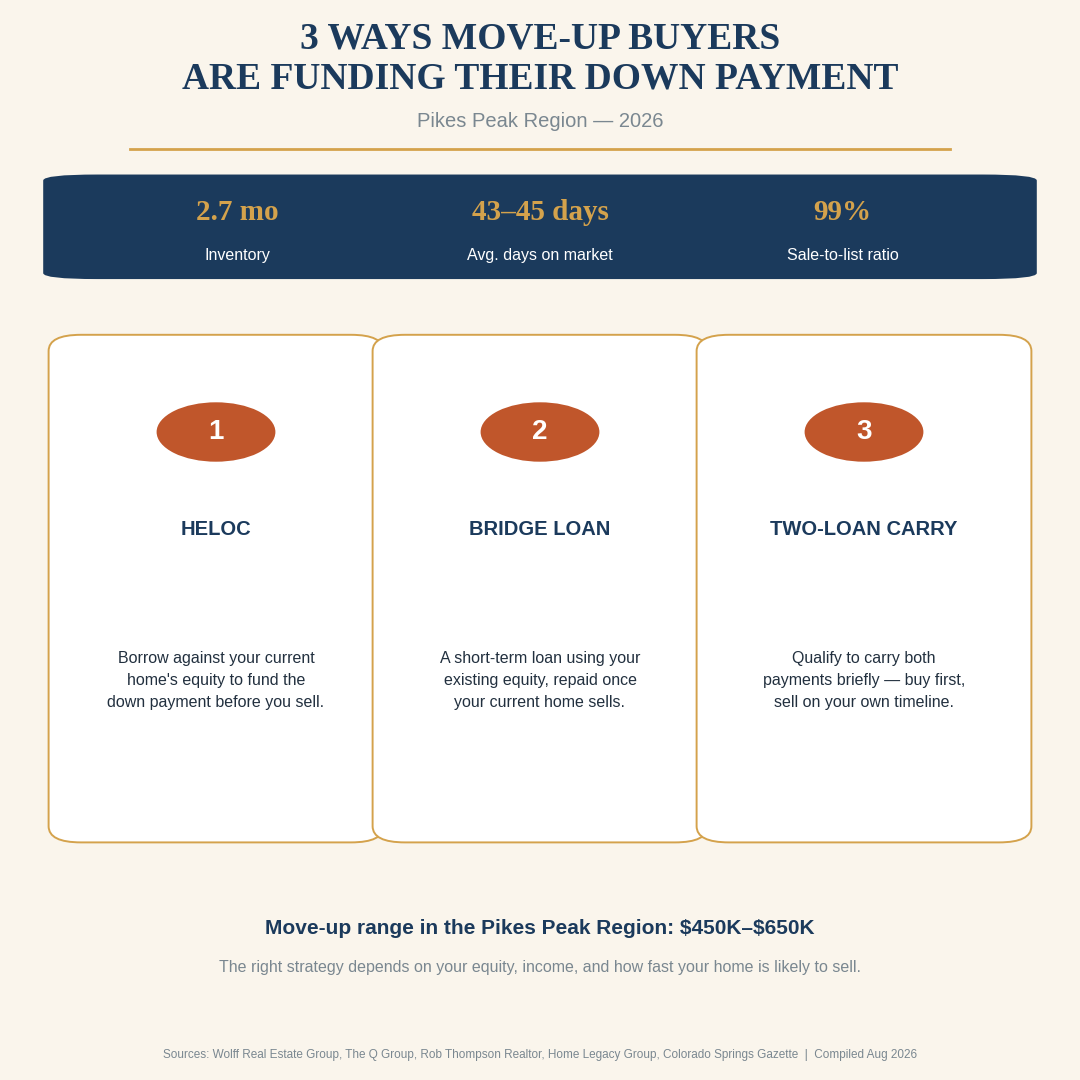
A HELOC on your current home. A home equity line of credit lets you borrow against the equity you've already built in your current property and use it as a down payment on the new one — all before you've sold. This works well if you're confident your current home will sell in a reasonable window and you want to move on the right property when it comes up, rather than waiting for your own closing first.
A short-term bridge loan. A bridge loan is built specifically for this situation: it uses the equity in your existing home to help you purchase the next one, with the expectation that the loan gets paid off once your current home sells. It's a more structured, purpose-built version of the same idea as a HELOC, and it's worth discussing with a lender if your timeline between selling and buying is tight.
A temporary two-loan carry. Some move-up buyers qualify to carry both mortgage payments for a short window — buying the new home before listing or closing on the old one. This requires stronger qualifying income (which is where lender pre-approval conversations become essential), but it removes the pressure of needing your sale to close before you can make an offer.
Each of these has trade-offs around cost, qualification, and risk tolerance, and the right one depends on your specific equity position, income, and how quickly you expect your current home to sell in today's market.
What "Balanced Market" Actually Means for You
A balanced market can sound like bad news in a headline, but for move-up sellers it often works in your favor on the buying side. More inventory and slightly longer days on market mean less competition and more room to negotiate on the home you're buying — even if it means being a bit more strategic about pricing the home you're selling. You're not choosing between "sell in a frenzy" or "wait it out" anymore; you have real room to plan both sides of the transaction deliberately.
Turning Your Equity Into a Plan
The equity you've built is real, but it only becomes useful once it's attached to an actual number and a strategy. That starts with knowing what your current home is worth today, what you'd realistically net after a sale, and which of the three financing paths above fits your income and timeline.
Curious what your equity could actually fund? Reach out for a free home-value estimate and a move-up financing breakdown built around your specific numbers — no pressure, just a clear picture of your options.
Sources: The 2026 Move-Up Guide for North Colorado Springs, Monument, and Black Forest (Wolff Real Estate Group), Colorado Springs Summer 2026 Housing Market: Why This Window Won't Stay Open Long for Buyers or Sellers (The Q Group), Colorado Springs Housing Market — August 01, 2026 (Rob Thompson, Realtor), El Paso County Colorado Springs Real Estate Market Report | May 2026 Stats, Home sales in Colorado Springs area jump, but housing market expected to remain flat in 2026 (Colorado Springs Gazette)


